
This ornament style has been worn for over a thousand years, first as an offering to deities in South Indian shrines and later as a symbol of bridal grandeur and classical dance. Today, shoppers face one real question: should you invest in the original, gold version, or is the imitation kind the better buy? This guide breaks down materials, cost, comfort, and everyday practicality so you can decide with confidence, and shows why, for most modern buyers, imitation temple jewellery has quietly become the smarter option.
What Is Temple Jewellery? A Quick Origin Story
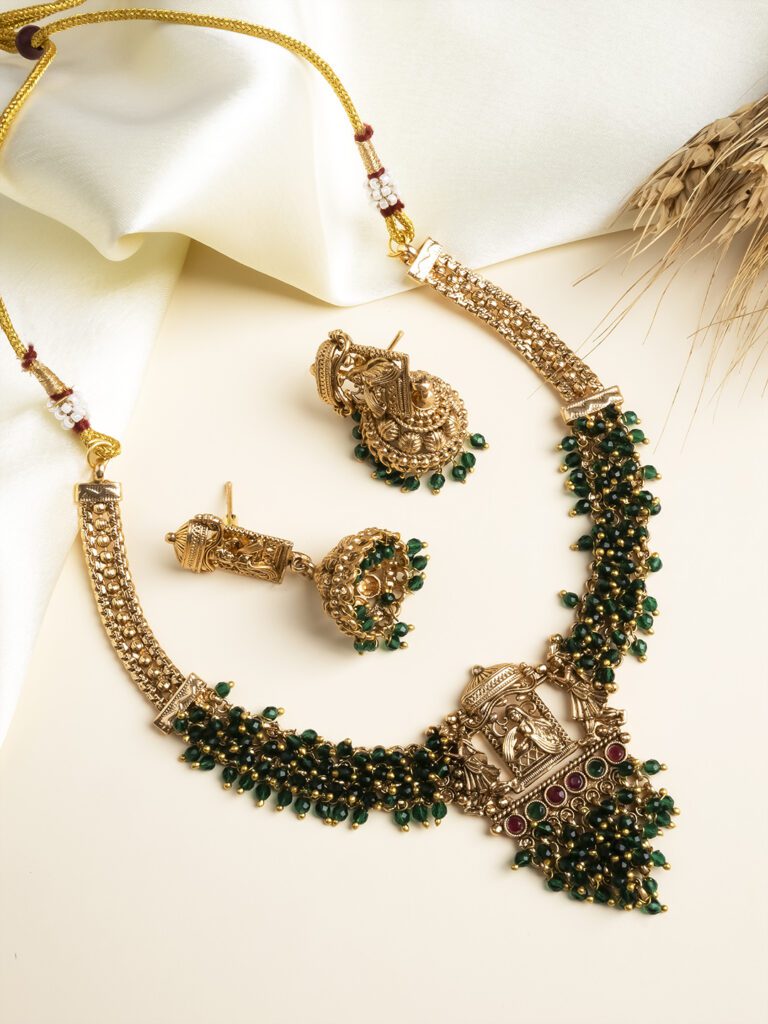
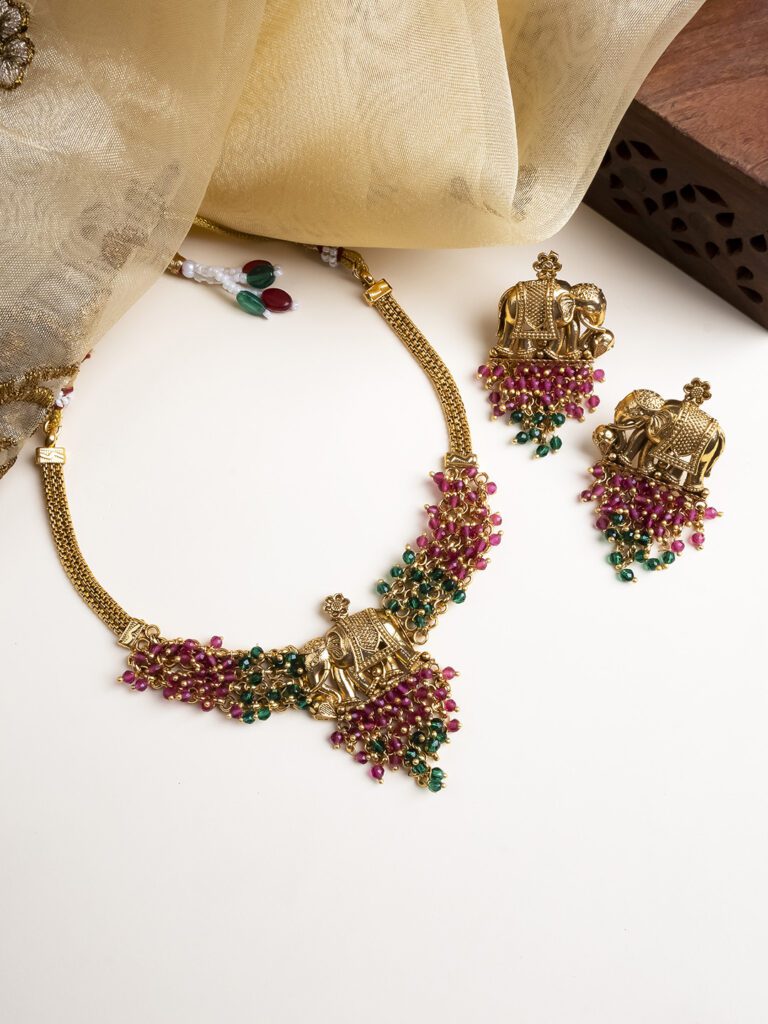
Temple jewellery traces back to the Chola, Pandya, and Krishnadeva Raya dynasties, when royal workshops crafted gold ornaments to adorn temple idols during festivals. Motifs like the lotus, peacock, and goddess Lakshmi were carved into gold and later became the templates for nakshi jewellery worn by dancers and brides. Much of today’s authentic production is still centred in Vadasery, a small village near Nagercoil in Tamil Nadu, which holds a Geographical Indication tag for this craft. That heritage is exactly why original pieces command such a premium, and why the imitation category had to evolve to match their beauty.
Original Temple Jewellery: Materials, Craftsmanship and Cost
How Original Temple Jewellery Is Made
Authentic pieces typically start with a pure silver or gold base, hand-covered with a thin sheet of 24-carat gold leaf rather than electroplating. Artisans set natural kemp stones (spinels), pearls, and sometimes kundan or polki work by hand, a process that can take weeks for a single haram or jhumka.
Why Original Temple Jewellery Is Expensive
With gold prices at record highs in 2026, a single original set can run into lakhs of rupees. The cost reflects genuine metal weight, hand-finishing, and the scarcity of skilled Vadasery artisans, not just design.
Imitation Temple Jewellery: What It Really Is
Materials Used in Imitation Temple Jewellery
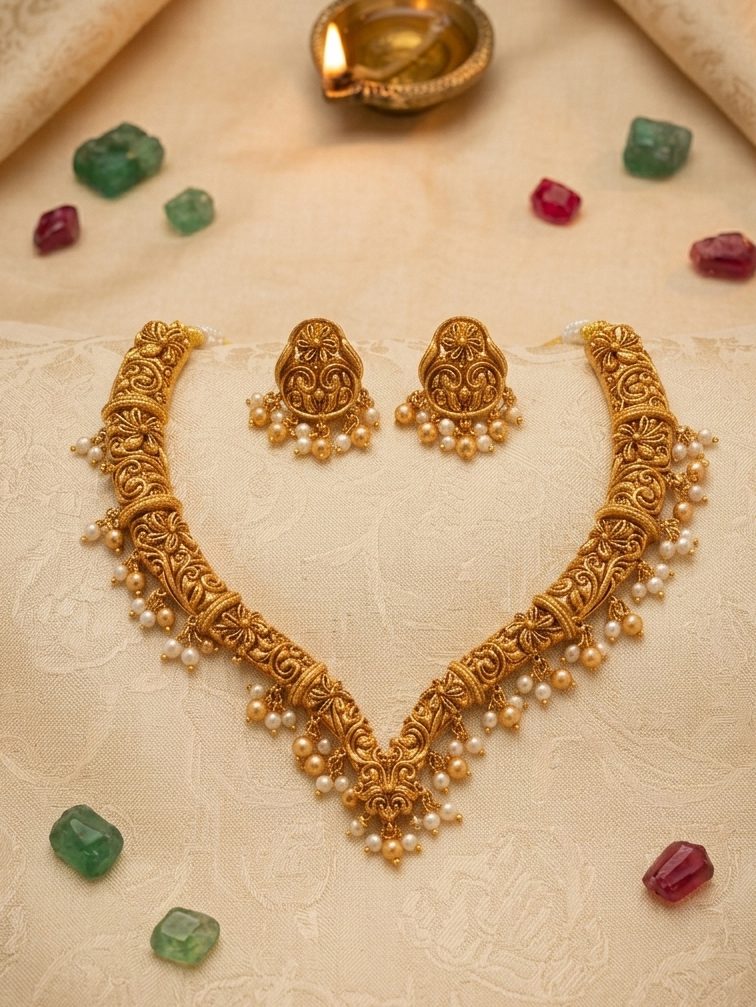
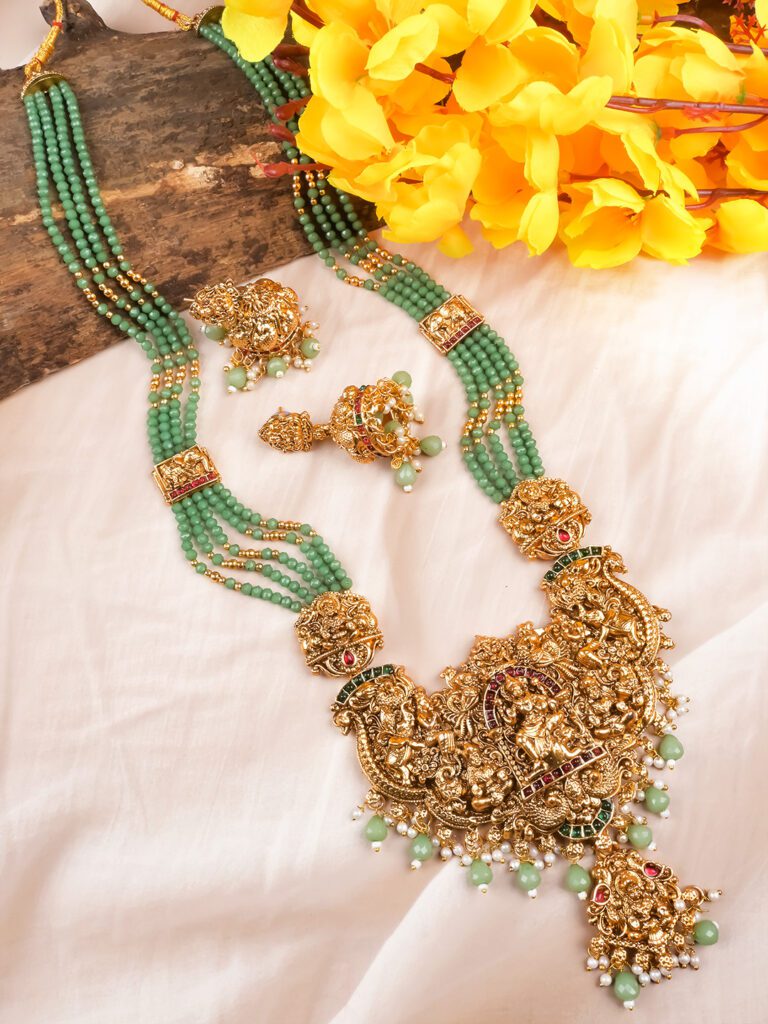
Good-quality imitation pieces are built on a brass or alloy base, finished with gold plating or a “1 gram gold” polish that mimics real gold’s shine without the weight of solid gold. Stones are usually glass, cubic zirconia, or synthetic kemp rather than natural spinel.
How Imitation Pieces Are Made Today
Modern manufacturers have closed much of the visual gap between original and imitation designs. Precision moulding, micro-plating, and matte or antique finishing techniques now replicate temple motifs so closely that, in most social settings, the difference is invisible to the naked eye.
Original vs Imitation Temple Jewellery: Side-by-Side Comparison
| Factor | Original | Imitation |
|---|---|---|
| Base material | Gold or silver | Brass or alloy, gold-plated |
| Average cost | ₹50,000–₹5,00,000+ | ₹500–₹15,000 |
| Weight | Heavy | Light |
| Stones | Natural kemp, pearls | Glass, CZ, synthetic kemp |
| Best for | Heirlooms, weddings, investment | Daily wear, events, dance, travel |
| Maintenance | High (locker storage, insurance) | Low |
7 Reasons Imitation Temple Jewellery Is Often the Smarter Choice
1. Affordability Without Compromising the Look
A well-made imitation set can cost a fraction of the original price while capturing the same intricate deity motifs, kemp-stone colour play, and antique finish that make this style so distinctive.
2. Lighter and More Comfortable for Long Wear
Solid gold or silver pieces can be genuinely heavy on the neck and ears. Because imitation jewellery uses lightweight alloy, it’s far more comfortable for weddings, performances, or full-day events.
3. Safer for Daily and Travel Use
Carrying an original gold set to a destination wedding or a dance recital means insurance, security, and constant worry. Choosing imitation removes that risk entirely, so you can wear elaborate designs without fear of theft or loss.
4. Wider Design Variety and Faster Trend Updates
Because imitation pieces don’t require gold sourcing, brands can experiment with new designs, colour combinations, and modern silhouettes far more quickly than gold workshops can.
5. Low Maintenance
The original version needs careful storage, periodic polishing, and locker space. Imitation pieces can simply be wiped clean and stored in a pouch, with no ongoing upkeep costs.
6. Hypoallergenic Options Available
Many imitation jewellery brands now offer nickel-free or hypoallergenic plating, which is often gentler on sensitive skin than antique gold alloys that contain trace metals.
7. Ideal for Performances, Rentals and Occasional Wear
For Bharatanatyam dancers, bridesmaids, or anyone needing a set for a single occasion, this affordable route delivers the full traditional look, headpiece, jhumka, vanki, and odiyanam included, without tying up capital in gold
When Should You Choose Original Temple Jewellery Instead?
Original pieces still make sense as a long-term investment, an heirloom passed across generations, or a centrepiece bridal purchase where authenticity and resale value in gold matter more than upfront cost. If your priority is legacy over convenience, the original craft remains unmatched.
How to Identify Good-Quality Imitation Temple Jewellery
Check the Base Metal
Brass holds plating better and feels sturdier than cheap white-metal alternatives, so ask specifically what alloy is used.
Look at the Gold Finish
Micro gold-plating or “1 gram gold” finishes last longer and resist tarnishing better than basic electroplated coatings.
Examine the Stones
Well-set synthetic kemp stones should sit flush and catch light evenly; loose or dull stones usually signal a lower-quality imitation set.
Caring for Your Temple Jewellery, Original or Imitation
Store pieces in individual pouches away from moisture and perfume, avoid direct contact with water, and clean gently with a soft cloth. These simple habits extend the life of both original and imitation designs equally.
Where to Buy Good-Quality Imitation Temple Jewellery
If you’ve decided imitation is the right fit for your budget and lifestyle, buying from a brand that specialises in the craft makes a real difference to finish and durability. StileAdda is a good example: its temple jewellery collection features brass-based, gold-plated necklaces, earrings, and bridal sets with the antique and matte finishes covered earlier in this guide, at prices well below solid gold. Browsing a dedicated collection like this is also a fast way to compare motifs, stone work, and finish quality side by side before you commit to a set.
Frequently Asked Questions
Is imitation jewellery as good as the original?
For appearance, yes. High-quality imitation pieces replicate the motifs, colours, and finish of original temple jewellery closely enough that most people cannot tell the difference from a normal viewing distance.
Does imitation jewellery tarnish quickly?
Lower-quality plating can fade within months, but well-made imitation pieces with thicker micro-plating can retain their shine for one to two years with proper care.
Can I wear imitation jewellery for weddings?
Yes. Many South Indian brides now choose imitation sets for functions and reserve the original for the main ceremony, balancing cost, comfort, and tradition.
What is the main difference between temple jewellery and imitation jewellery?
It refers to the specific South Indian style rooted in deity motifs and temple art, while “imitation” describes the non-precious-metal construction; the imitation category combines both, the traditional design in an affordable form.
Is imitation jewellery safe for sensitive skin?
Many brands now offer nickel-free or hypoallergenic plating, though it’s worth checking product details before buying if you have known metal allergies.
Read Our Blog on Complete Guide to South Indian Bridal Temple Jewellery: Heritage Reimagined
Sources & Further Reading
-
- Shanthi Tailors, “Real vs. Imitation Temple Jewelry: The Ultimate Buyer’s Guide” — shanthitailor.com
-
- South Temple Jewellery, “Temple Jewellery India 2026: Complete Guide” — southtemplejewellery.com
-
- Ciceroni, “The Untold Story of Temple Jewellery” — ciceroni.in
-
- Pernia’s Pop-Up Shop, “Explore the Rich History of Temple Jewellery” — perniaspopupshop.com
-
- RuhRatna, “Temple Jewellery for Bharatanatyam: Complete Beginner’s Guide” — ruhratna.com